
Dofollow vs Nofollow Links: What’s the Difference and Why It Matters for SEO
12 min read
If you’ve ever worked on SEO, you’ve probably come across the terms dofollow and nofollow links.
At first, the difference seems simple: one link helps SEO, the other doesn’t.
But that’s not quite how it works.
Backlinks are more complicated than a simple “good link vs. bad link” system. The website linking to you, the context of the link, the anchor text, and even why the link exists can all affect how valuable that opportunity is.
So, what’s the actual difference between dofollow and nofollow links? Do nofollow links help SEO? Should you only build dofollow backlinks? And what should you look for when choosing SEO backlink services?
Let’s break it down.
Dofollow vs Nofollow: The Quick Answer
A dofollow link is the common SEO name for a regular link without a nofollow, ugc, or sponsored relationship attribute.
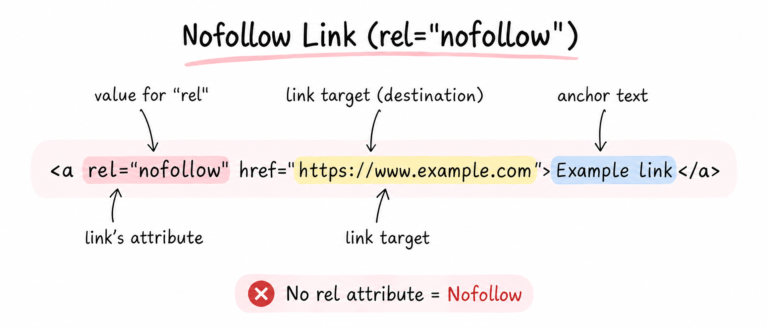
A nofollow link contains rel="nofollow" and tells Google that the site owner does not want the link treated as a normal editorial endorsement.
There are also two other important link attributes:
- UGC (
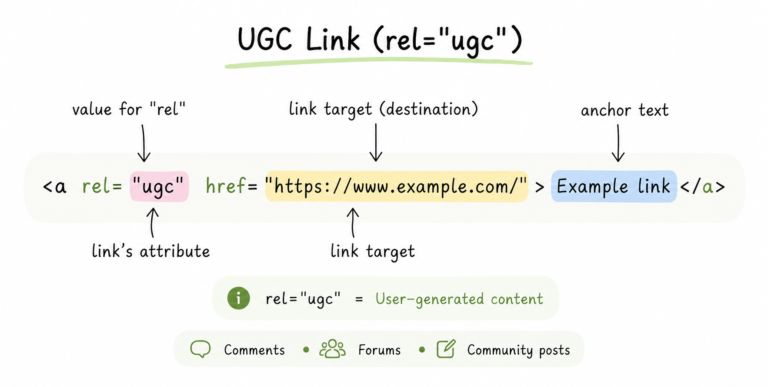
rel="ugc") — generally used for links in user-generated content such as comments and forum posts. - Sponsored (
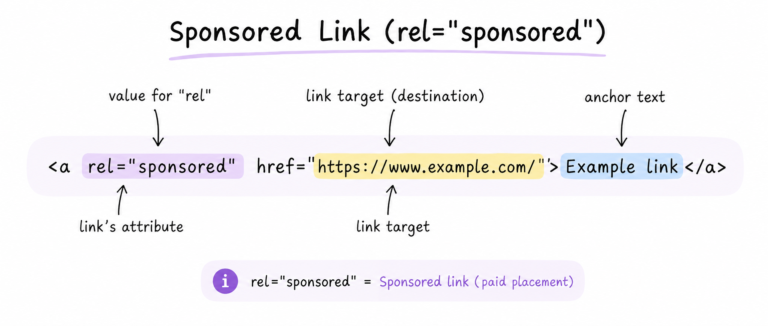
rel="sponsored") — used for advertisements, sponsorships, or other paid placements.
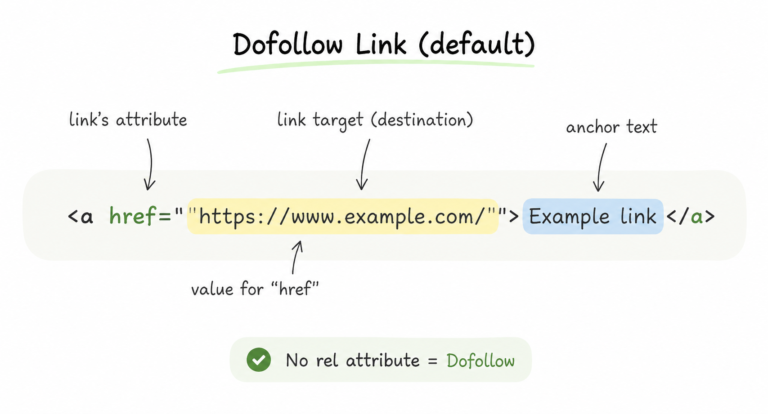
One small but important technical detail: “dofollow” isn’t actually an HTML attribute. You won’t normally see rel=”dofollow” in a link. It’s simply the SEO term people use for a regular link without a qualifying rel attribute. Google’s guidance on qualifying links explains how these rel values work.
For example: <a href="https://example.com/">Example link</a>
A nofollow link looks like: <a rel="nofollow" href="https://example.com/">Example link</a>
And a sponsored link looks like: <a rel="sponsored" href="https://example.com/">Example link</a>
Simple enough.
But the SEO implications are where things get interesting.
What Is a Dofollow Link?
A dofollow link is simply a regular hyperlink without a link qualification such as nofollow, ugc, or sponsored.
When another website links to your page naturally, that link can provide search engines with useful signals about your content and website.
For example, imagine you publish a detailed guide about link building.
A website that writes about SEO discovers your guide and references it in one of its articles: “For a deeper look at outreach mistakes, check out this guide.”
That is a natural editorial backlink.
The linking website is essentially saying: “This resource is useful enough for our readers to visit.”
That’s one reason followed backlinks are valuable in SEO.
Why dofollow backlinks matter
Quality followed backlinks can help with:
- Search engine discovery
- Authority signals
- Page-level relevance
- Organic visibility
- Referral traffic
- Brand exposure
But there’s an important distinction:
A dofollow link isn’t automatically a good backlink.
A followed link from an irrelevant or low-quality website isn’t necessarily something you should chase.
A relevant link from a website that genuinely discusses your industry can be much more meaningful.
That’s the principle behind good link building: the goal isn’t simply to collect links. It’s to build links that make sense.
What Is a Nofollow Link?
A nofollow link contains: rel="nofollow"
For example: <a rel="nofollow" href="https://example.com/">Example link</a>
The attribute tells Google that the site owner doesn’t want the link treated like a standard editorial endorsement. Google currently describes nofollow as an option to use when other qualifying values don’t apply and you don’t want to associate your site with the linked page or have Google crawl that page from your site.
Nofollow links are commonly found on:
- Forums
- Blog comments
- Some large publications
- User-generated platforms
- Certain promotional placements
But here’s the part people often get wrong:
Nofollow does not mean worthless.
A nofollow link can still put your website in front of real people.
Someone can click it.
Someone can discover your brand through it.
Someone can read your article and later link to it from their own website.
Someone can even become a customer.
So if you’re looking at a backlink profile and see nofollow links, don’t immediately assume they’re useless.
SEO isn’t happening inside a spreadsheet.
People are still clicking those links.
Dofollow vs Nofollow: What's the Difference?
Here’s the easiest way to compare them:
| Dofollow | Nofollow | |
|---|---|---|
| Common HTML attribute | None | rel="nofollow" |
| Can users click it? | Yes | Yes |
| Can generate referral traffic? | Yes | Yes |
| Treated as a normal followed link? | Yes | No |
| Useful for brand visibility | Yes | Yes |
| Should you build only this type? | No | No |
The biggest takeaway?
Don’t judge a backlink by its attribute alone.
Look at the entire context.
Do Nofollow Links Help SEO?
This is probably the most common question surrounding nofollow backlinks.
The short answer is:
They can still be valuable, even though they aren’t treated like normal followed links.
There are several ways a nofollow backlink can contribute to your overall SEO strategy.
1. Referral traffic
If a website with a relevant audience links to your content, people can click the link regardless of whether it’s nofollow.
If 500 people discover your website through that link, that’s still 500 opportunities to introduce someone to your brand.
2. Brand awareness
Getting mentioned by a respected website can put your company in front of an audience that may never have discovered you otherwise.
For a growing website like Insertofy, that exposure matters.
3. More opportunities for backlinks
A person might discover your article through a nofollow link and decide to reference it somewhere else.
For example:
Publication → nofollow link → reader discovers your guide → reader publishes an article → followed backlink
The original link didn’t have to be a followed link to create a useful outcome.
4. A more natural backlink profile
Real websites don’t normally receive backlinks in one perfectly controlled format.
You’ll naturally accumulate different types of links as people mention, reference, share, discuss, and recommend your content.
That’s normal.
Google also treats nofollow, ugc, and sponsored as hints rather than absolute commands for its systems.
Are Dofollow Links Better Than Nofollow Links?
If we’re talking specifically about traditional SEO link signals, a followed backlink is generally more desirable.
But that doesn’t mean a followed backlink is always more valuable overall.
Imagine two opportunities.
Backlink A
A random website gives you a dofollow link.
It has almost no relevant audience, weak content, and the article exists mainly to place links.
Backlink B
A respected website in your industry mentions your brand and gives you a nofollow link.
The article gets real readers, and the audience is directly relevant to your business.
Which one would you rather have?
I’d take Backlink B before blindly chasing Backlink A.
Because a backlink has value beyond its HTML attributes.
What Makes a Backlink Valuable?
This is where link building becomes more interesting.
Instead of asking: “Is this link dofollow?”
ask: “Is this a good website to be mentioned on?”
Here are the factors worth looking at.
1. Relevance
A backlink should ideally come from a website or page related to your topic.
If your website is about SEO and link building, a backlink from a digital marketing or SaaS website makes sense.
A random link from an unrelated website doesn’t suddenly become valuable just because it’s dofollow.
2. Context
Where the link appears matters.
A link naturally placed inside an informative paragraph is much more meaningful than a random link dumped into a page with dozens of unrelated URLs.
Good backlinks should feel like they belong there.
3. Website quality
Look beyond a single SEO metric.
Consider the website’s:
- Content quality
- Organic visibility
- Relevance
- Audience
- Publishing history
- Overall reputation
Metrics such as Domain Rating can be useful for prospecting, but they shouldn’t be the only reason you accept a link.
4. Anchor Text
Anchor text is the clickable part of a hyperlink.
For example: Learn more about SEO backlink services.
“SEO backlink services” is the anchor text.
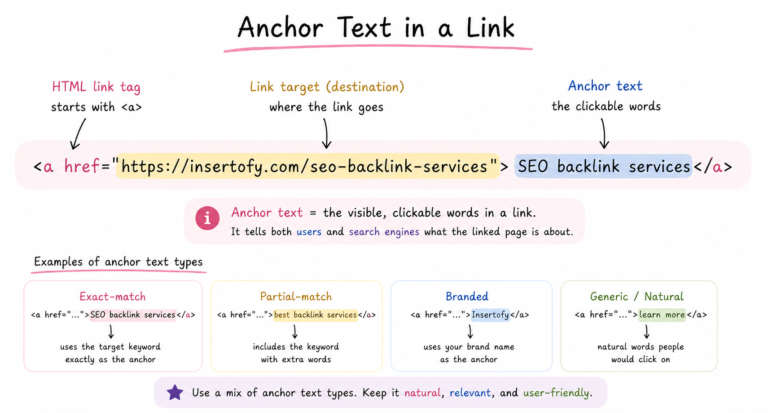
Your backlink profile shouldn’t consist of the exact same commercial keyword repeated again and again.
Natural variations might include:
- link building
- backlink strategy
- SEO backlink services
- Insertofy
- learn more
- branded terms
- descriptive phrases
- URLs
The anchor should fit naturally into the sentence.
5. Placement
A contextual link inside the main content is usually more interesting than a link hidden away in an unrelated part of a website.
Ask yourself:
Would a real reader actually find this link useful?
If the answer is yes, you’re probably looking at a better opportunity.
What Are Sponsored Links?
Sponsored links are links connected to advertising, sponsorships, or other compensated arrangements.
They can use: rel="sponsored"
For example: <a rel="sponsored" href="https://example.com/">Example link</a>
Google recommends using rel="sponsored" for links that are advertisements or paid placements. nofollow is still acceptable for these situations, but sponsored is the preferred qualification.
If you’re paying for a placement, don’t think: “I need to make sure they remove the sponsored attribute.”
That’s the wrong mindset.
The goal of SEO isn’t to hide the relationship between a website and a paid placement.
What Are UGC Links?
UGC stands for User-Generated Content.
The rel="ugc" attribute is intended for links that appear in content created by users.
For example: <a rel="ugc" href="https://example.com/">Example link</a>
UGC links can appear in:
- Forum discussions
- Community posts
- Blog comments
- User-created content
Google recommends rel="ugc" for links within user-generated content such as comments and forum posts.
Should You Only Build Dofollow Backlinks?
No.
This is one of the biggest mistakes beginners make.
They start building backlinks and immediately create a spreadsheet:
| Website | DR | Traffic | Dofollow? |
|---|---|---|---|
| Website A | 72 | 20K | Yes |
| Website B | 65 | 10K | No |
| Website C | 54 | 8K | Yes |
Then they reject Website B because it says “nofollow.”
That’s too simplistic.
Instead, evaluate the entire opportunity.
Would the audience care about your website?
Is the page relevant?
Could the link generate visitors?
Is the website credible?
Would the mention increase brand awareness?
If yes, the opportunity may still be worth pursuing.
How to Get High-Quality Dofollow Backlinks
If your goal is to grow organic visibility, followed editorial backlinks can absolutely be part of your strategy.
But the way you acquire them matters.
Create content worth referencing
The easiest backlink to understand is the one someone gives you because your content is genuinely useful.
That could be:
- Original research
- Statistics
- Detailed guides
- Free tools
- Templates
- Industry studies
- Expert insights
- Useful checklists
If there’s nothing worth linking to, outreach becomes much harder.
Build relationships
Link building isn’t only about sending hundreds of emails.
Building relationships with website owners, editors, writers, and marketers can lead to better opportunities over time.
A good relationship can turn one backlink into multiple collaborations.
Use targeted outreach
Instead of sending the same email to 500 websites, identify pages where your content genuinely adds value.
Then explain why your resource belongs there.
That’s much closer to how effective outreach should work.
For more on this, Insertofy has a guide covering backlink outreach and outreach email templates, including link insertions, guest posts, personalization, and follow-ups.
Consider professional link-building help
If you’re managing SEO for a business and don’t have time to prospect, research websites, write outreach emails, negotiate placements, and track backlinks, professional SEO backlink services can save a lot of time.
But don’t choose a provider based on: “We guarantee 500 dofollow backlinks.”
Ask what kind of websites they’re targeting, how they qualify prospects, where links are placed, and whether the strategy is designed for long-term growth.
At Insertofy, the focus is on contextual link insertion opportunities, relevance matching, and outreach-ready prospecting rather than simply chasing a giant backlink number.
How to Check if a Link Is Dofollow or Nofollow
You don’t need to be a developer to check a link.
Option 1: Inspect the link
Right-click the link and select Inspect.
You’ll see something similar to: <a href="https://example.com/">Example</a>
No rel="nofollow" attribute?
That’s a normal followed link.
If you see: <a rel="nofollow" href="https://example.com/">Example</a>
it’s nofollow.
You may also see: rel="ugc"
or: rel="sponsored"
depending on the type of link.
Option 2: Use an SEO tool
SEO platforms can make backlink analysis much faster when you’re working with hundreds or thousands of links.
You can use them to investigate:
- Referring domains
- Backlink attributes
- Anchor text
- Linking pages
- Traffic estimates
- Historical backlinks
But remember:
The tool is there to help you make a decision, not make the decision for you.
A metric doesn’t replace common sense.
How Many Dofollow Backlinks Do You Need?
There’s no magic number.
You don’t need: 50 backlinks = page 1
or: 100 dofollow links = guaranteed rankings
SEO doesn’t work like that.
The number of backlinks needed depends on the competition for the keyword and the strength of the websites already ranking.
For example, a small informational keyword might be relatively easy to rank for with strong content and a few relevant links.
A competitive commercial keyword such as SEO backlink services can require significantly more authority, stronger content, and a more developed backlink profile.
Instead of asking: “How many backlinks do I need?”
ask: “What do the pages already ranking have that my page doesn’t?”
Then close that gap.
Dofollow vs Nofollow: What Should You Focus On?
If your goal is organic search growth, prioritize high-quality, relevant, followed editorial backlinks.
But don’t completely ignore nofollow links.
A healthy link-building strategy can include:
Relevant websites + strong content + natural anchors + editorial placements + different link types.
That’s a much stronger approach than trying to collect as many dofollow links as possible.
And honestly, this is where a lot of backlink campaigns go wrong.
They optimize for the number of links instead of the quality of opportunities.
More isn’t always better.
Better is better.
Closing thoughts
Dofollow and nofollow links aren’t enemies.
They’re simply different ways of qualifying links.
Focus on relevance, quality, context, and value for the reader. Instead of asking, “Is this dofollow?”, ask:
“Would I actually want my website mentioned here?”
Build links that make sense. Build relationships. Let the results follow.