
Getting Started With Link Building
5 min read
Consider this your beginner onboarding to link building and backlinks.
For anyone just starting out in SEO, link building may seem like a much harder concept than it actually is. You’ll often hear terms like backlinks, authority, rankings, and outreach, but the idea behind link building is much simpler than it sounds.
It can feel like there’s a lot to learn at first, but once you understand the basics, everything else starts to make sense. So, let’s start with the question everyone asks first.
What Is Link Building?
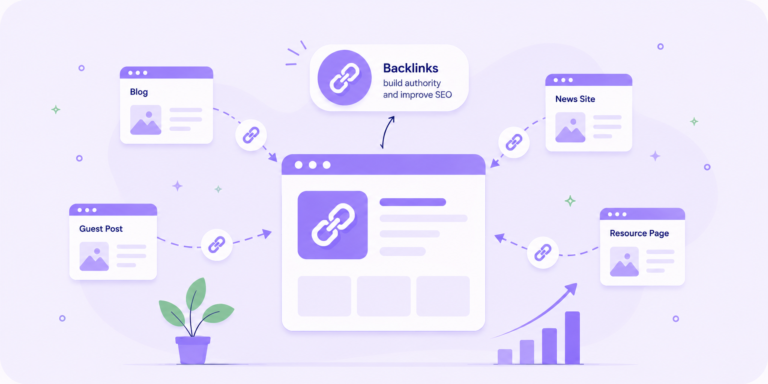
Link building is the process of getting other websites to link back to your pages. These links, called backlinks, help search engines understand which content is trustworthy, relevant, and useful online.
Think of backlinks as recommendations. When one website links to another, it’s a way of saying, “This content is worth checking out.” When a trusted website links to your content, it sends a positive signal that your page may offer value to readers.
In SEO, backlinks have always played a major role in how websites build authority and visibility in search results. While content remains important, strong backlinks often help pages perform better and reach more people organically.
Why Do Backlinks Matter in SEO?
Search engines use backlinks as signals of trust. When other websites link to your content, it helps Google better understand that your pages may be valuable, relevant, and worth showing in search results.
Not all backlinks have the same impact, though. A backlink from a trusted and relevant website will usually carry much more value than dozens of low-quality links from unrelated sites.
That’s why modern link building is no longer just about getting as many backlinks as possible. Today, relevance, quality, and natural connections between websites matter much more.
How Search Engines View Backlinks
Search engines look at backlinks as signals between websites. When multiple trusted websites link to the same page, it helps search engines understand that the content may be useful, reliable, or relevant to users.
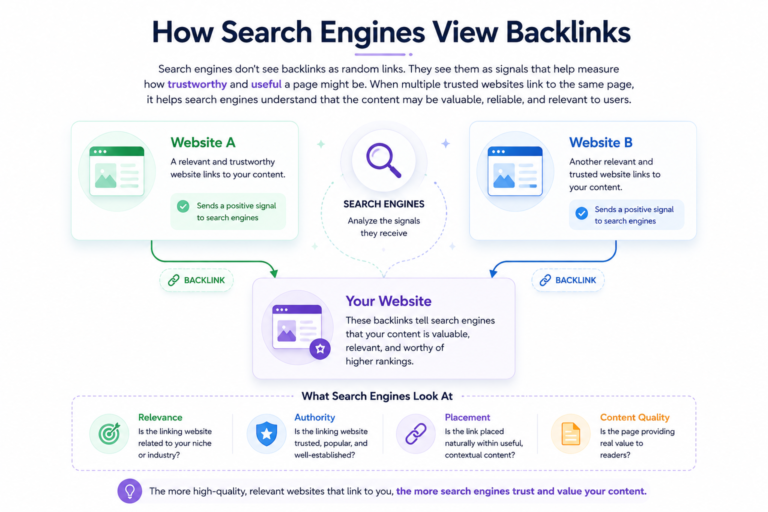
But backlinks are not only about quantity. Search engines also pay attention to things like:
- relevance between websites
- content quality
- natural link placement
- website authority
This is one reason why a few strong backlinks can often be more valuable than hundreds of weak or spammy ones.
What Makes a Good Backlink?
Not every backlink has the same value. Some backlinks can help your rankings, while others may have little impact or even do more harm than good. The difference often comes down to where the link comes from and how naturally it fits within the content.
Here are some qualities of a valuable backlink:
Relevance: A backlink from a website in the same or a related industry is usually more valuable than one from an unrelated site.
Authority: Links from trusted, well-established websites tend to carry more weight.
Natural placement: Backlinks that fit naturally within useful content are generally more valuable than links placed only for SEO purposes.
Quality content: A backlink is more meaningful when it comes from a page that offers real value to readers.
Remember, one high-quality backlink can often be worth far more than dozens of low-quality ones.
Common Ways to Build Backlinks
There are many ways to build backlinks, but not every strategy works for every website. The best approach often depends on your industry, goals, and the type of content you create. Here are some of the most common methods:
Guest Posting
Writing an article for another website in exchange for a backlink to your own content. It’s one of the most popular link building strategies when done on relevant, high-quality websites.
Link Insertions
Also known as niche edits, these involve adding a backlink to an existing article that already has relevant content. When done naturally, they can benefit both websites.
Digital PR
Creating newsworthy content or unique insights that journalists and publishers want to reference and link to.
Resource Pages
Many websites maintain pages that list helpful tools, guides, or resources. If your content provides value, you may be able to earn a backlink by being included.
Creating Link-Worthy Content
Sometimes the best way to earn backlinks is by publishing content people genuinely want to reference, such as original research, detailed guides, free tools, or useful templates.
Common Link Building Mistakes
Even with the best intentions, beginners often make a few common mistakes when building backlinks. Avoiding these early on can save you time and help you build a stronger backlink profile.
- Focusing only on quantity instead of quality.
- Getting backlinks from unrelated websites.
- Using the same anchor text everywhere.
- Ignoring valuable internal links.
- Expecting results overnight.
Closing thoughts
Link building doesn’t have to feel overwhelming. Every website starts with zero backlinks, and building authority takes time. By focusing on creating valuable content, building genuine relationships, and earning relevant backlinks, you’ll be building a stronger foundation for long-term SEO success.
Want to avoid the mistakes that hold many beginners back? Read our guide on 7 Link Building Outreach Mistakes That Stop You From Getting Backlinks to learn what to watch out for before starting your first outreach campaign.