
What Are Backlinks? A Beginner's Guide to SEO Links
4 min read
Imagine you’ve just published the best article you’ve ever written.
You spent hours researching, writing, and making sure every detail was useful. You hit publish, expecting people to discover it through Google.
But days go by, then weeks, and nothing really happens.
One possible reason is that other websites aren’t linking to your content yet.
That’s where backlinks come in.
Backlinks are one of the strongest signals search engines use to understand whether a page is trustworthy, valuable, and worth showing to more people. If you’re just getting started with SEO, understanding backlinks is one of the most important things you’ll learn.
What Are Backlinks?
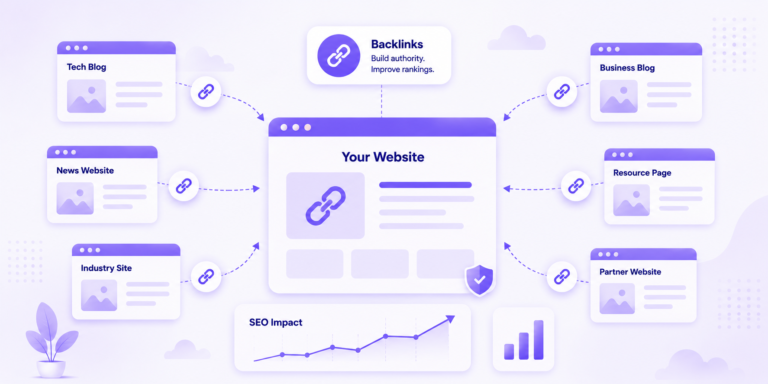
A backlink is simply a link from one website to another.
For example, if a marketing blog writes an article and includes a link to one of your pages, you’ve earned a backlink.
Think of backlinks as recommendations between websites. When one website links to another, it’s a way of saying:
“This content is worth checking out.”
The more high-quality and relevant websites that recommend your content, the more confidence search engines may have in your pages.
Why Are Backlinks Important?
Search engines want to show users the best and most trustworthy results.
One way they estimate trust is by looking at which websites link to a page. When respected websites naturally link to your content, it can signal that your page provides useful information.
Backlinks can help:
- Improve your visibility in search results
- Build your website’s authority
- Bring referral traffic from other websites
- Help search engines discover new pages faster
While backlinks aren’t the only ranking factor, they remain one of the most important parts of SEO.
How Do Backlinks Work?
Imagine Website A publishes a useful article and links to Website B.
That link becomes a connection between the two websites.
Search engines crawl those links and use them to understand how different pages relate to one another. If several trustworthy websites point to the same page, it often becomes a stronger signal that the content deserves attention.
Of course, not every backlink carries the same value. The quality and relevance of the linking website matter much more than simply having a large number of links.
Types of Backlinks
There are several types of backlinks you’ll come across while learning SEO.
Editorial Backlinks
These are earned naturally when another website links to your content because it finds it genuinely useful.
They are often considered the most valuable type of backlink.
Guest Post Backlinks
Guest posting involves writing content for another website and including a relevant backlink to your own website.
When done on high-quality, relevant websites, guest posting remains one of the most effective link building strategies.
Link Insertions
Also known as niche edits, link insertions involve adding a backlink to an existing article that already covers a related topic.
Since the content is already published and indexed, this can be an effective way to earn contextual backlinks.
Directory Backlinks
Some business directories allow websites to list their company information and include a backlink.
These links can be helpful for visibility, but they usually carry less SEO value than editorial backlinks.
Forum and Community Backlinks
Links shared in communities, forums, or discussion platforms can drive traffic and build awareness, although they often have limited SEO value.
Dofollow vs. Nofollow Backlinks
Not every backlink passes the same level of SEO value.
Dofollow Links
These are the standard backlinks that can pass authority from one page to another.
Most SEO campaigns focus on earning high-quality dofollow backlinks.
Nofollow Links
Nofollow links include an attribute that tells search engines not to treat the link as a ranking signal in the traditional way.
Although they may pass little or no authority, they can still bring referral traffic, increase brand awareness, and create natural link profiles.
What Makes a Good Backlink?
Not all backlinks are equally valuable.
A strong backlink usually has these qualities:
- Comes from a relevant website
- Comes from a trusted, authoritative source
- Fits naturally within useful content
- Uses descriptive anchor text
- Is placed where readers are likely to click
One relevant backlink from a respected website can often provide more value than dozens of low-quality links.
Common Backlink Mistakes
Many beginners make the same mistakes when they first start building backlinks.
Some of the most common include:
Focusing only on the number of backlinks
Getting links from unrelated websites
Buying spammy backlinks
Using the same anchor text repeatedly
Ignoring content quality
If you’re earning backlinks through outreach, avoiding common link building outreach mistakes can significantly improve your success rate.
How Can You Earn Backlinks?
There isn’t a single method that works for every website, but some of the most effective approaches include:
- Creating helpful, original content
- Guest posting on relevant websites
- Building relationships within your industry
- Earning mentions through digital PR
- Getting included on resource pages
- Using link insertions where appropriate
The best backlink strategies focus on providing value first. When your content genuinely helps people, earning backlinks becomes much easier.